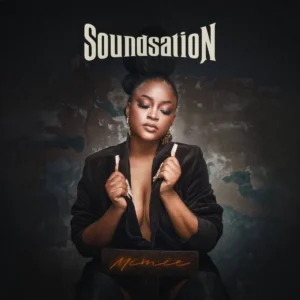

From shorter releases to the changing economics of music, is the Cameroonian music industry moving away from the traditional album, and what could that mean for its artistic future?
There was a time when releasing an album was one of the biggest milestones in an African musician’s career. An album represented years of work, artistic maturity, identity and ambition. It was a statement that an artist had something substantial to offer beyond a successful single.
Today, however, the musical landscape is changing. In Cameroon, as in many other music markets, we increasingly encounter artists announcing EPs rather than full-length albums. Shorter projects appear to have become an attractive release strategy, particularly among emerging and independent musicians.
But why is this happening? Is it simply a matter of changing musical trends, financial limitations, streaming platforms or a shift in how artists perceive their careers?
And perhaps more importantly, are we gradually losing the cultural importance of the African music album?
1. First, what is the difference between an EP and an album?
Before examining the trend, it is important to understand the distinction.
An EP, short for Extended Play, is a musical project containing more material than a single but generally less than a full-length album. It typically features four to six songs and runs for approximately 15 to 30 minutes.
An album, often called an LP (Long Play), is a more extensive musical body of work. It generally contains seven or more tracks and offers a longer listening experience. However, classifications vary between digital distribution platforms.
The difference is not simply the number of songs. It is also about the scope of the artistic project.
An EP can introduce a musical direction, experiment with a sound or keep an artist connected to an audience between major releases.
An album, on the other hand, offers more room for storytelling, musical diversity, collaborations, experimentation and the development of a broader artistic identity.
Neither format is automatically better. Their value depends on the artist’s intention and execution.
2. The economics behind the EP culture
One possible explanation for the increasing popularity of EPs is financial.
Making music professionally is expensive. From studio recording and production to mixing, mastering, artwork, distribution and promotion, releasing a complete album requires significant resources.
For many independent Cameroonian artists, financing a seven-to-fifteen-track album can be a considerable challenge.
An EP offers a more manageable alternative. Rather than spending months financing a large project, an artist can concentrate resources on a smaller collection of songs.
There is also the question of music consumption. Research on the Cameroonian music industry has highlighted the difficulties surrounding piracy, purchasing power and the transition towards paid digital music consumption.
In an environment where monetisation remains challenging, investing heavily in a full album without a strong promotional and distribution strategy can be financially risky.
For an emerging artist, releasing a five-track EP might therefore be a calculated business decision rather than a lack of artistic ambition.
3. The influence of streaming and social media
The digital music era has transformed how artists release and promote their work.
Previously, an album could remain the centre of an artist’s promotional campaign for months or even years.
Today, artists operate in an environment where visibility is constantly contested. Instagram, TikTok, YouTube, Facebook and streaming platforms have changed the relationship between music releases and audience attention.
An artist can release a single, promote it through short videos, build momentum and follow it with another release.
EPs fit naturally into this environment.
They allow musicians to maintain a regular release schedule without necessarily waiting years to complete a full album.
They also provide several opportunities to promote individual tracks from the same project.
However, this strategy raises another question: are artists creating music primarily to develop their artistic identity or to remain visible in the digital marketplace?
The two objectives can coexist, but they are not necessarily the same.
4. What happened to the ambition of making an album?
Perhaps the most interesting question is not why artists release EPs, but why the album seems to have lost some of its traditional prestige.
In African music culture, albums have historically served purposes beyond entertainment.
They have been vehicles for storytelling, cultural expression, social commentary and the preservation of musical identity.
Consider the importance of albums in the careers of African artists such as Fela Kuti, Youssou N’Dour, Salif Keita, Manu Dibango and Angélique Kidjo.
Their bodies of work demonstrate how albums can become artistic and cultural documents that transcend individual hit songs.
An album gives an artist the opportunity to explore different subjects, musical influences, emotions and cultural experiences within one coherent project.
For African musicians, this can be particularly important.
Our music carries stories about our languages, traditions, social realities, political experiences, relationships and everyday lives.
A complete album can become a musical portrait of a particular generation or period in history.
This is not to suggest that an EP cannot achieve the same artistic depth. It certainly can. But the longer format provides more space to develop an ambitious musical vision.
5. The African album as a cultural statement
There is something important about the relationship between African music and the album format.
African music is incredibly diverse. From Makossa, Bikutsi, Mbalax and Highlife to Afrobeat, Amapiano, Congolese Rumba and contemporary African hip-hop, musical identity has always been connected to cultural expression.
Albums have helped artists present these identities to audiences beyond their immediate communities.
They also create opportunities to bring together different generations, musical traditions and creative influences.
For Cameroonian artists, an album can be an opportunity to document the evolution of local sounds and introduce international audiences to the richness of the country’s musical landscape.
Imagine an album that brings together Bikutsi, Makossa, contemporary hip-hop, traditional instrumentation and different Cameroonian languages.
Such a project could become more than a commercial release. It could be a cultural statement.
The question is whether the current generation of artists is giving itself enough time and creative space to develop projects of this nature.





6. Are EPs the problem, or is the industry lacking structure?
It would be unfair to blame artists for choosing EPs.
The EP is a legitimate artistic format. Some of the most interesting musical projects in the world have been EPs.
The real issue may be the broader structure of the music industry.
Do emerging Cameroonian artists have access to adequate financing, professional management, effective distribution, strategic promotion and sustainable revenue opportunities?
Can an independent artist afford to invest in a full album and still have the resources to promote it properly?
Do record labels and music managers have long-term development strategies, or are they primarily concerned with maintaining an artist’s visibility?
These are important questions because the success of an album depends on much more than recording ten songs.
It requires planning, artistic direction, investment, marketing and an audience willing to engage with the complete project.
Perhaps the challenge is not that Cameroonian artists are releasing too many EPs. Perhaps it is that the industry still needs stronger structures to support ambitious musical projects.
7. Finding a balance between EPs and albums
The future does not have to be a battle between EPs and albums.
Artists can use EPs to experiment, introduce new sounds, develop their audience and test the market before committing to a larger project.
They can also use singles to build anticipation for an album.
What matters is having a clear artistic and professional strategy.
An EP should not simply be an album that an artist could not afford to finish. Equally, an album should not be a collection of unnecessary songs released simply to demonstrate productivity.
Both formats should have artistic purpose.
Conclusion: Beyond the number of songs
The growing popularity of EPs reflects a changing music industry, one shaped by financial realities, digital distribution, social media and evolving listening habits.
But we should not forget what albums represent.
An album can be a legacy. It can tell a story that a single cannot tell. It can preserve sounds, document cultural experiences and introduce future generations to the artistic vision of a particular era.
Cameroonian artists should not abandon EPs. They should simply remember that there is still a place for ambitious, well-crafted full-length albums.
Because beyond the streams, the playlists and the promotional campaigns, an important question remains:
When future generations look back at today’s Cameroonian music scene, what complete bodies of work will tell them who we were, what we experienced and what our music represented?
Perhaps the real conversation should not be about EPs versus albums,but about the kind of musical legacy we want to build.