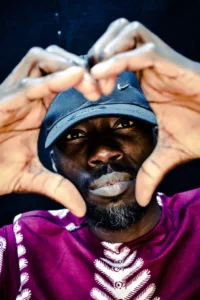
Between faith, lyrical expression and the realities of everyday life, Baggo Mich represents a side of Cameroonian hip-hop that deserves greater recognition.
Cameroonian hip-hop has never been short of talent, originality or artistic ambition. From street-oriented rap to conscious lyricism, Afro-hip-hop and commercially driven sounds, the country’s rap culture continues to reflect the experiences, frustrations and aspirations of a generation.
Yet, within this diverse musical landscape, some voices remain outside the spotlight. One of them is BAGGO MICH, a Cameroonian rapper and songwriter whose artistic identity is rooted in conscious hip-hop and gospel rap.
Despite his musical projects, videos and continued artistic activity, Baggo Mich remains relatively underrecognized within the wider Cameroonian hip-hop conversation. His situation raises an interesting question: why do artists who use hip-hop to communicate faith, personal experiences and meaningful social messages often struggle to gain broader visibility?
A musical journey built around expression and faith
Baggo Mich’s musical identity is not limited to religious messaging. His approach brings together hip-hop, personal storytelling, social reflection and Christian consciousness.
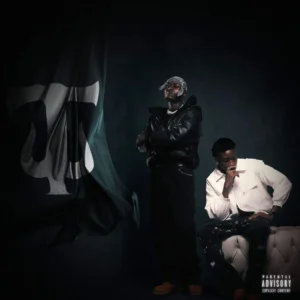
His discography includes projects such as Sabi NoDi Hide, Eagle View, a collaborative album with Mr.H, and BREAKTHROUGH, a gospel hip-hop mixtape.
These projects reveal an artist exploring different dimensions of life through rap. His musical universe touches on ambition, relationships, family, money, personal struggles, faith and the search for freedom.
On Eagle View, for example, songs such as “Dream Big”, “Please Don’t Cry”, “Same Thang”, “Rep Heaven” and “Free” illustrate different aspects of his artistic expression.
“Dream Big” speaks to ambition and the desire to pursue something greater. “Please Don’t Cry” takes a more emotional direction, while “Same Thang” explores social realities. “Rep Heaven” places his Christian identity more directly at the centre of his music.
This diversity matters. It suggests that Baggo Mich is interested in using hip-hop not simply as entertainment, but as a medium through which he can communicate different experiences and perspectives.
The challenge of being a gospel rapper in Cameroon
One of the most interesting aspects of Baggo Mich’s career is the position he occupies within the Cameroonian hip-hop scene.
Gospel rap exists within a complicated space. It is hip-hop, but its Christian identity can sometimes place it in a separate category from mainstream rap. It speaks to religious audiences, but it can also address subjects that extend far beyond church communities.
This creates a visibility challenge.
Some mainstream listeners may assume gospel rap is exclusively religious music. Meanwhile, some gospel audiences may be more familiar with traditional Christian music than with contemporary hip-hop production and lyrical styles.
The result can be an audience gap: an artist may have something meaningful to communicate but struggle to reach listeners outside an established community.
Baggo Mich’s challenge, therefore, is not necessarily the absence of an artistic identity. It is the difficulty of making that identity visible and understandable to a wider audience.
However, it would be unfair to suggest that gospel rap has no place in Cameroonian hip-hop. Rather, the genre deserves more serious engagement, criticism, media coverage and opportunities for collaboration.
Why does Baggo Mich remain relatively unknown?
Being relatively unknown is not the same as lacking talent or musical substance. Recognition in the music industry depends on several factors beyond the quality of the music.
For an independent artist such as Baggo Mich, some possible challenges include:
1. Limited media exposure
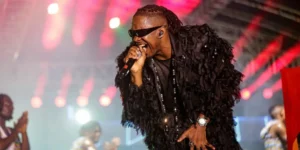
An artist cannot build national recognition through music releases alone. Interviews, radio appearances, music journalism, reviews and live performances help audiences discover an artist and understand their work.
2. The challenge of genre classification
Being identified primarily as a gospel rapper may unintentionally limit the audiences and platforms that discover his music.
Baggo Mich can maintain his Christian identity while presenting himself more broadly as a conscious hip-hop artist. His faith should be an essential part of his artistic expression, not a boundary that prevents people from exploring his music.
3. Independent promotion and limited resources
Independent musicians often have to manage recording, distribution, marketing, visual production and networking themselves.
Without a professional promotional structure, an artist’s releases can disappear quickly from public attention, even when the music deserves a longer listening life.
4. Limited industry relationships
Recognition is also built through relationships with other artists, producers, DJs, promoters, journalists and music platforms.
Collaborations and professional connections can help an artist enter audiences and networks that would otherwise remain inaccessible.
The importance of his music
The importance of Baggo Mich’s music should not be measured only by streaming numbers or social media followers.
Hip-hop has always been a space for storytelling, social commentary, identity and resistance. It allows artists to communicate experiences that are often overlooked by mainstream cultural conversations.
Gospel hip-hop adds another dimension to this tradition: the expression of faith through a musical language that is deeply connected to contemporary youth culture.
For Baggo Mich, this means exploring the relationship between spirituality and everyday life. Faith can coexist with conversations about ambition, family, financial struggles, relationships, disappointment and personal growth.
This is important because young listeners do not experience life in separate categories. Their questions about identity, money, love, success, social pressure and spirituality often overlap.
Music that acknowledges these realities can offer more than entertainment. It can encourage reflection, provide emotional connection and give listeners a different perspective on their experiences.
There is also a cultural importance in the use of multiple languages. By working across English, French and Pidgin, Baggo Mich participates in a multilingual musical environment that reflects the diversity of Cameroon and its audiences.
Beyond the label of gospel rap
Perhaps one of the most important steps in Baggo Mich’s artistic development is to encourage listeners to approach his music without immediately placing it inside a narrow category.
He is a rapper. He is a songwriter. He is an artist whose Christian faith informs his perspective.
But his music can also be examined through the broader traditions of conscious hip-hop, lyrical storytelling and African musical expression.
This does not mean abandoning gospel rap or hiding his religious convictions to attract mainstream audiences. It means allowing the music to speak to people who may not necessarily share his beliefs.
An artist can communicate faith without making every listener feel that they must belong to the same religious community to appreciate the music.
That distinction could be central to Baggo Mich’s wider artistic reach.
A new opportunity for recognition
With projects such as Sabi NoDi Hide, Eagle View and BREAKTHROUGH forming part of his musical journey, Baggo Mich has a catalogue that offers material for a more sustained conversation about his career.
His next challenge is to transform that body of work into greater public visibility.
That requires more than another release. It requires a consistent artistic narrative, stronger media relationships, meaningful collaborations, live performances and a promotional strategy that introduces his music to both gospel and mainstream hip-hop audiences.
His upcoming album could provide an important opportunity to do exactly that.
But recognition should not be treated as an automatic reward for releasing music. It is built through sustained artistic development, audience connection and participation in the wider musical ecosystem.
Giving conscious and gospel hip-hop its place
The Cameroonian hip-hop conversation should be broad enough to accommodate different artistic identities.
Commercial rap, underground hip-hop, conscious rap, gospel rap and experimental sounds all contribute to the culture. No single category should determine whether an artist deserves to be heard or taken seriously.
Baggo Mich’s career presents an opportunity to examine a part of that culture that deserves more attention.
He may not yet have the visibility of some better-known names in Cameroonian rap, but his musical direction raises questions worth discussing: What space does gospel hip-hop occupy in Cameroon? How can independent conscious rappers reach wider audiences? And how can the industry recognize artists whose ambitions extend beyond commercial success?
Ultimately, the importance of Baggo Mich’s music lies in its attempt to bring faith, personal experience and hip-hop expression into the same artistic conversation.
He does not need to abandon his identity to become more visible.
He needs the opportunity, the audience and the platforms to let that identity be heard.